
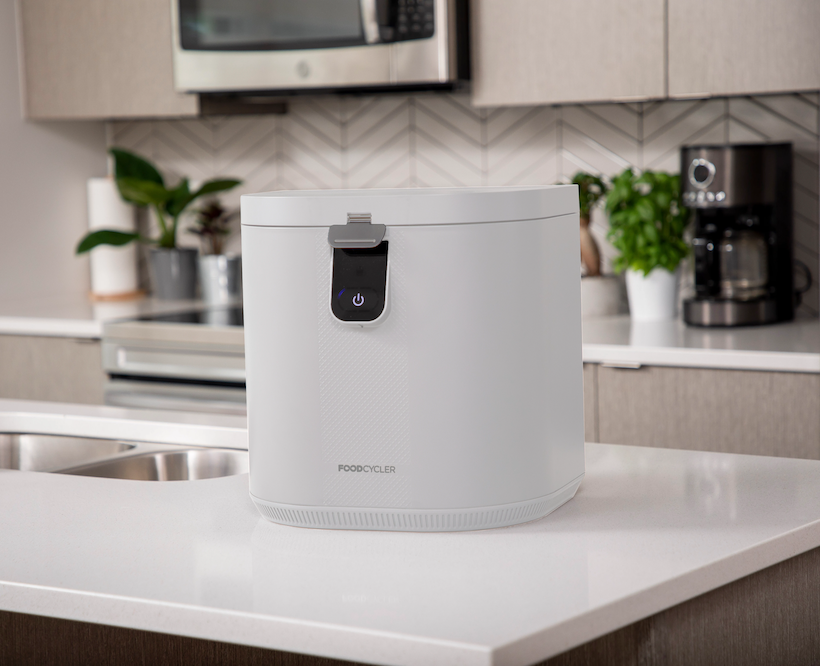
As a private chef, I have the privilege of working with an abundance of ingredients daily. This culinary journey often leads to a significant amount of food scraps and waste during the preparation process. So, you can imagine my excitement when I discovered the FoodCycler by Vitamix Eco 5. It’s more than just a solution for household food waste; it’s become an indispensable tool in my kitchen, and I’d like to share my personal experience with you.
Vitamix, known for its exceptional blenders, has taken a remarkable step in addressing the issue of food waste. They’ve introduced their third-generation FoodCycler, the FoodCycler by Vitamix Eco 5, which is designed to efficiently transform food waste into a valuable soil fertilizer with remarkable ease.
Food waste is a topic that’s close to my heart as a chef. Not only is it environmentally responsible to reduce waste, but it’s also crucial to divert as much food waste as possible from landfills. Surprisingly, food waste constitutes a significant portion of landfill trash, and a large percentage ends up there, even in households. The FoodCycler doesn’t compost waste in the traditional sense. Instead, it dehydrates and grinds it down to become what Vitamix aptly calls a “Recycled Food Compound” (RFC). This compound can be used as a nutrient-rich fertilizer in gardens, yards, or planter boxes, making it a valuable resource for sustainable living.
What impresses me the most about the FoodCycler is its remarkable effectiveness. Before using this, I often disposed of a significant portion of my food waste through the garbage disposal. While this method is more eco-friendly than trashing food, it still poses challenges for wastewater systems and consumes a substantial amount of water. The FoodCycler, on the other hand, allows me to divert nearly all of my waste, including items that should never be introduced to the disposal, like banana peels and avocado pits.
While countertop composting machines can’t handle as wide a range of materials as traditional compost piles, the FoodCycler Eco 5 is quite accommodating. It can process a commendable list of food items, including tougher materials like poultry bones.
The resulting product is not technically compost, but it’s impressively close in terms of the speed at which it processes waste. You can utilize this RFC as a fertilizer by mixing it with soil at a specific ratio. The FoodCycler Eco 5 has a substantial 5-liter capacity, double that of its predecessor. This means I don’t have to run it frequently to keep up with our kitchen’s discards. Even when hosting family or friends, the larger bucket proves to be highly convenient.
Despite its substantial waste transformation capabilities, the FoodCycler Eco 5 is incredibly user-friendly. Once you’ve filled the bucket to the max fill line, all you need to do is close the lid and press the on button. The machine takes care of the rest, dehydrating and grinding away, typically taking anywhere from four to nine hours, depending on the contents.
It’s true that the FoodCycler Eco 5 is slightly larger than most countertop appliances, but it’s designed to fit under standard cabinets without being an eyesore. Vitamix has stepped up its design game with this second-generation machine. It exudes a sleek and modern appearance with its matte finish, minimal branding, and a simple touch screen button for operation. Plus, you can choose from two different colors (white and black) to match your kitchen aesthetics.
One of the standout features of this machine is its remarkably quiet operation. For most of each cycle, the only sound you’ll hear is a low buzz or hum, and there’s hardly any discernible odor, thanks to the carbon foam liner in the unit lid and the carbon pellets in the refillable filter. You even get a separate bucket lid with replaceable carbon filters to collect food scraps, which keeps odors at bay. So, you don’t have to worry about unpleasant smells, even if you don’t keep the whole machine on your counter.
Now, let’s talk about the cost. I won’t sugarcoat it; at $600, the FoodCycler is an investment for a countertop appliance. If your city offers municipal composting or if you have the space and inclination to compost on your own or with a private service, it might seem more budget-friendly. It’s worth mentioning that you’ll need to replace carbon filter pellets, the unit lid carbon foam liner, and collection lid filters periodically, which adds to the ongoing cost.
However, let me emphasize that I’ve found distinct benefits over private composting services, and I’ve even compared it to the Lomi, another popular countertop composting machine. The FoodCycler Eco 5 has the edge when it comes to handling food waste, particularly items like avocado pits and certain hard bones. Additionally, the ease of tossing my waste into the bucket and operating the device right in my own kitchen, on my schedule, is a significant advantage.
One of the features that brings peace of mind is the three-year warranty, which is a testament to Vitamix’s reputation for durable and high-quality kitchen devices. Personally, my Vitamix blender has served me well for a decade, and it still performs like new.
In comparison to its predecessor, the FoodCycler Eco 5 boasts improvements in aesthetics, waste minimization, and bucket capacity. However, the previous generation FoodCycler FC-50 is still a worthy consideration, especially if it takes time to collect enough food scraps to fill a five-liter bucket. At $200 less, it’s an attractive choice.
There are other countertop composting machines on the market, with the Lomi being a notable competitor. Both machines have

Leave a Reply
You must be logged in to post a comment.